Treenut's Forest Notes for 2025
2025 Farm Notes:
April 2025: White Spruce seeds sprout in large numbers.
This is a real experiment for me. I have never been able to successfully raise evergreen trees from seed. Fingers crossed.
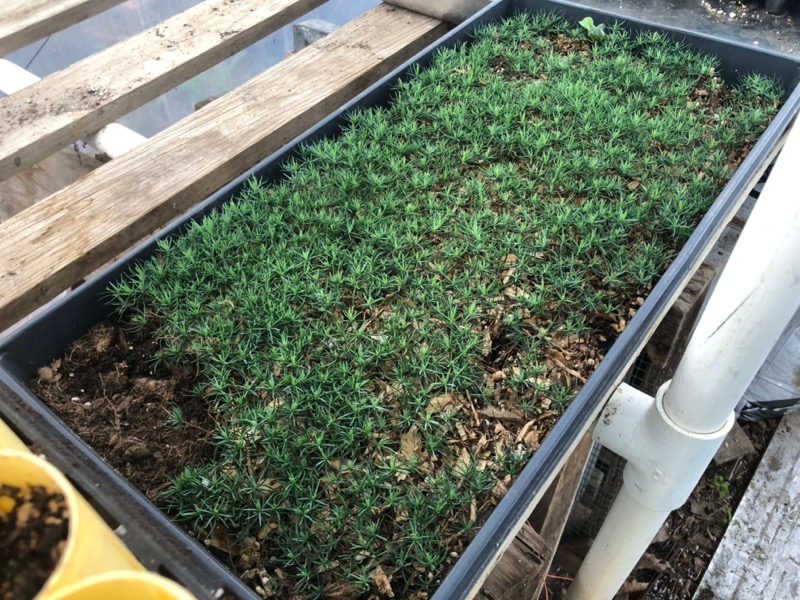
Will they survive?
I collected thousands of seeds from the cones -- enough to fill a sandwich bag. I mixed a couple handfulls with moist sand and put in fridge over winter.
In early spring I spread this mix out on top of potting mix in a planter tray and put in window. Then moved to greenhouse.
It seems like they all grew.
For history of these Spruce seeds (from 2024 log) [click HERE]
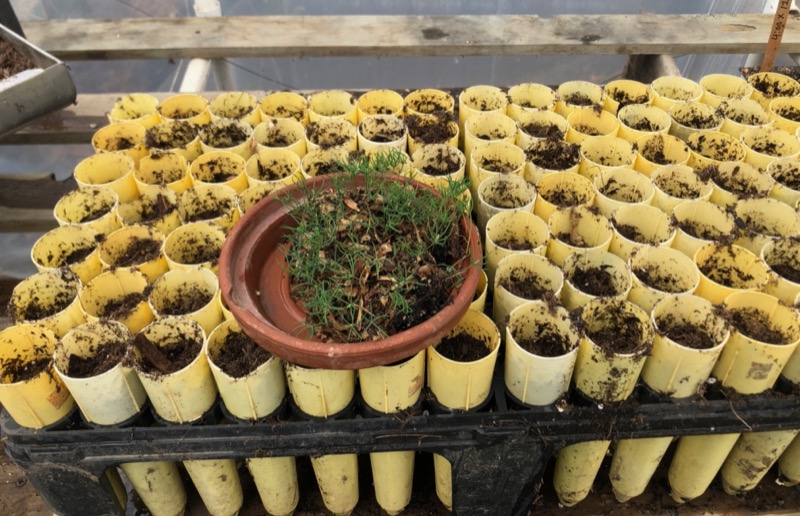
How will they tolerate a move?
There must be over 1000 in the flat. This little slice will fill this rack of 98 tubes.
What will I do with all these? I have nine (9) racks of these Cone-tainer tube pots.
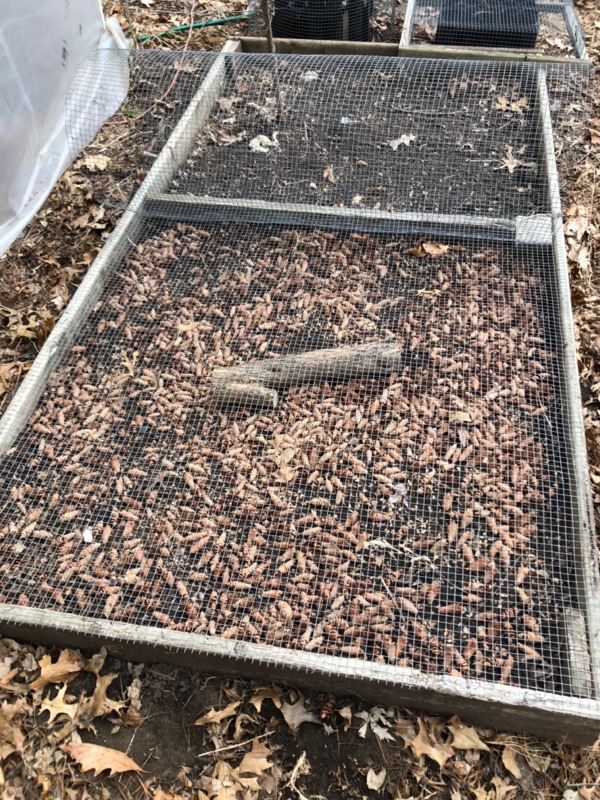
Are there any more seeds in these cones? We'll see...
After I collected all the seed I wanted, I spread the seed cones in a seedbed frame in my garden.
I wanted to see if seeds remain in the cones and will they grow 'outdoors'?
Answer: Yes and Yes!
Can they compete with the weeds -- Answer: no!
Next time I will use cleaner soil.
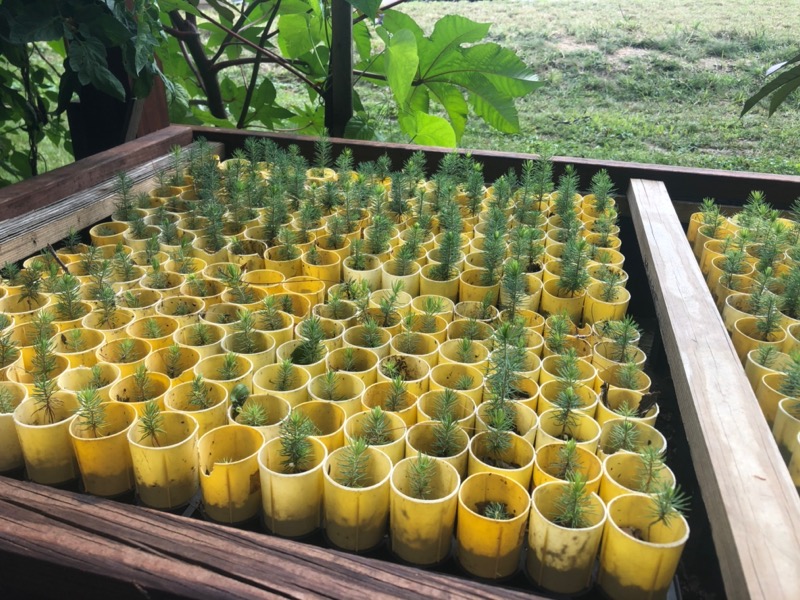
August 2025: Seedlings in Cone-Tainers after first summer's growth.
I currently have five (5) Cone-tainer racks full of White Spruce seedlings for a total of 490 healthy young trees.
Over the summer i have had many seedlings die (transplant shock?) and I have swapped in healthy trees from those remaining in the nursery tray. I would estimate that I've had a 30% mortality rate over the summer.
Winter 2025: Getting Potted White Pine Seedlings through the winter.
November 2025
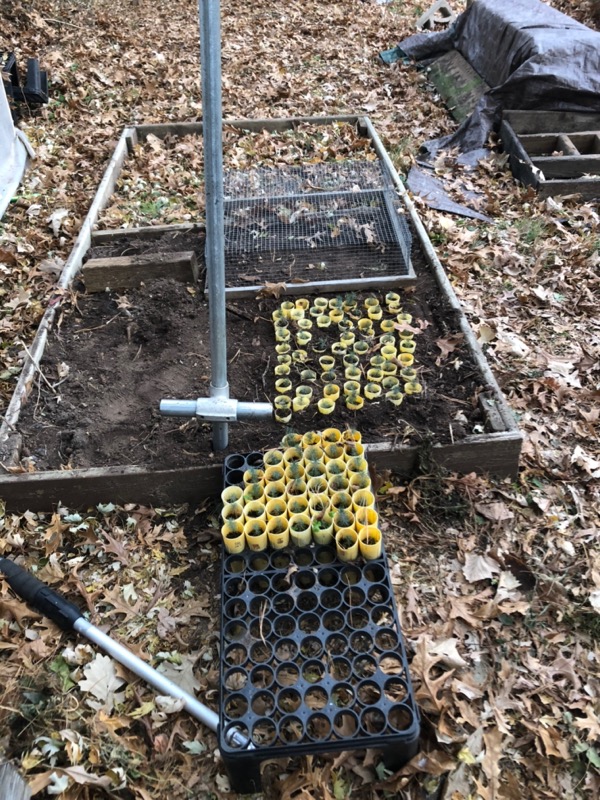
The pots from two racks have been removed from their racks and burried individually in the ground up to the tops of the pots.
My friend Chet made a soil 'corer' for me to dig tube-sized holes. The soil this fall was dry so I spaded this bed to loosen it. I 'planted' 200 tree tubes in this area to help protect the roots from a hard freeze.
I coverred these tubes with a screen box (shown in background) made from 1/2" mesh. This is to keep out the critters.
I think this tool will work great for planting these trees when the time comes.
December 2025:
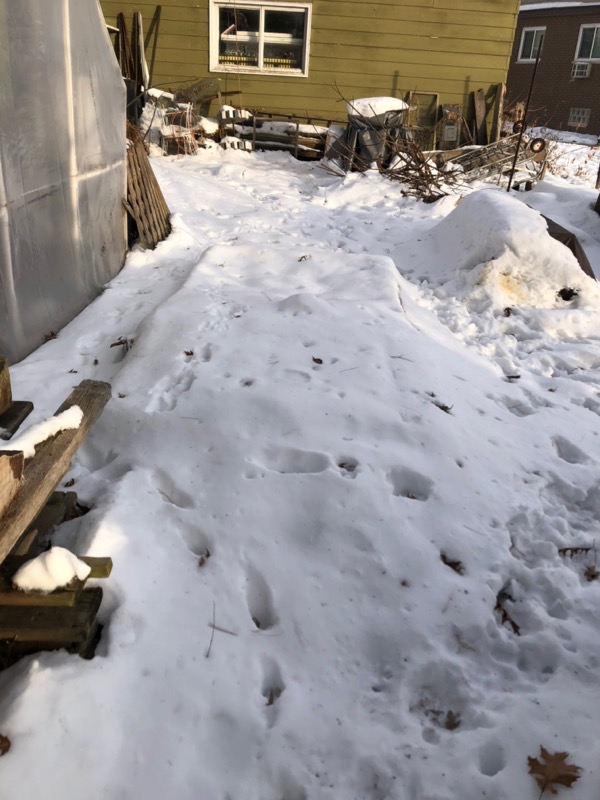
Snow cover on planting bed.
There are 200 baby trees under this blanket of snow. I hope they are comfortable.
I was glad that we got 12 inches of snow before the bottom fell out of the thermometer. Here in Madison, Wisconsin it usually warmes and thaws right away after a snowfall. This year is different. It is staying cold -- so far.
December 2025:
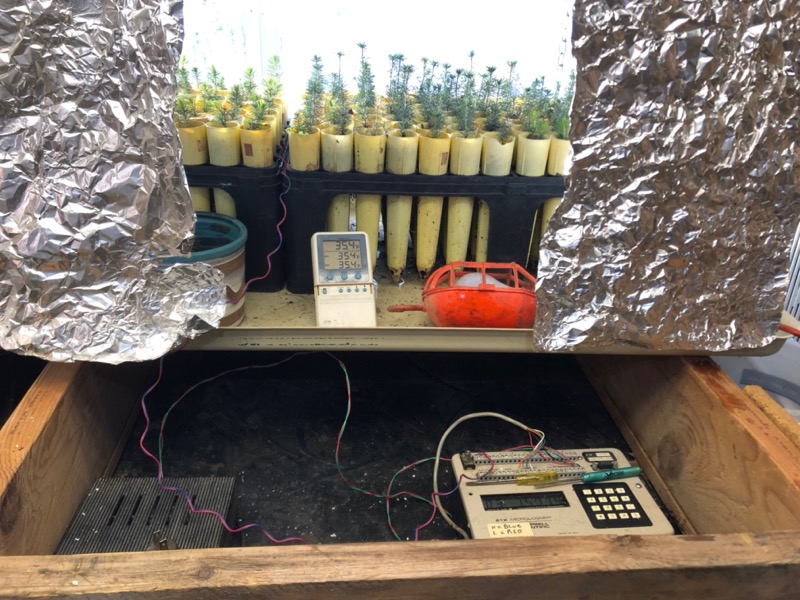
Two racks of potted (tubed) White Spruce seedlings in unheated garage window.
We have just endured our first cold weather of the winter. Outside temperatures have fallen to - 3 degrees F for a couple nights. The garage temperatures have stayed in the high 20's and buffer nicely.
I have these two racks set in a west window on a tray. I have a bank of grow lights over them that are on for 3 hours each morning to suplement the natural light. I monitor the temperature between the racks and have a controller programmed to turn on two 120 watt lightbulbs (incandecent) when the air temperature falls below 32 degrees F. and then turn off when it reaches 34 degrees F. It's amazing how much heat is given off by these lights.
I have been watering these pots about once a week as needed and draining off the excess.
January 2026:
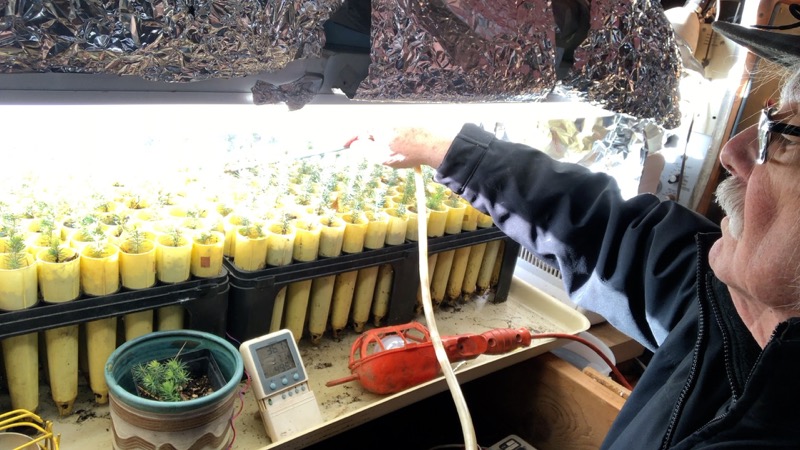
Watering potted spruce in garage
These spruce seedlings need water even in the winter -- even in dormancy.
These three thermostatically controlled 120 Watt bulbs (trouble lights) have kept these pots from hard frost. These spruce get a few hours of natural light on sunny days and 3 hours of grow lights every day.
The biggest danger to a young spruce's well-being is not the cold but lack of water. So about once a week I give each pot about 2 ounces of water. About 1/3 runs through the pots and drains to a bucket.
April 2026: ALL White Spruce Seedlings survived winter.
Last fall I ended up trying two different treatments to get these spruce seedlings through the winter: 1. bury the tubes in soil up to the top of the tube (but not over); 2. place racks on workbench in west window of unheated garage.
I watered both treatements when they were dry -- and when snow and ice permitted. This amounted to about every two weeks inside the garage, and twice during the winter for those outside.
All 5 racks of tubed trees survived the winter with less than 5% mortality over-all.
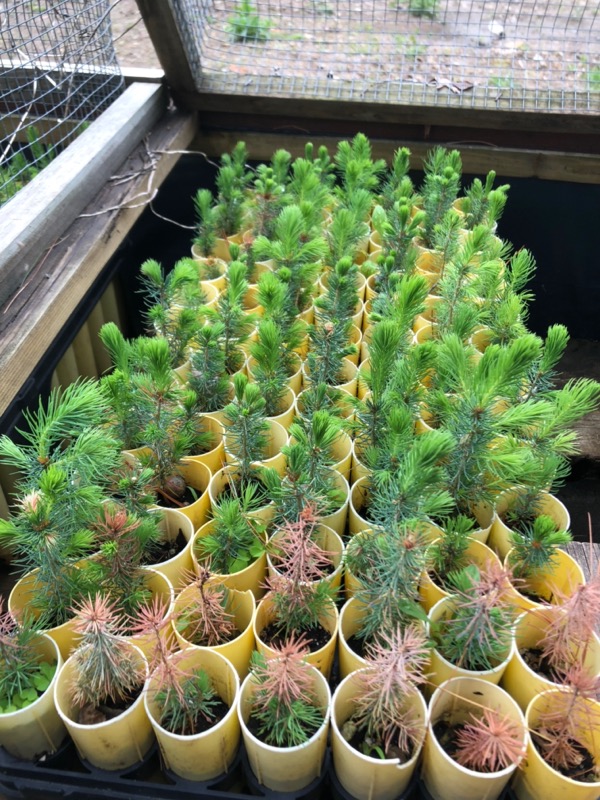
Example rack of tubes. This rack is from garage.
The browning on the tops of some was caused by burning. I was a little eager in putting these outside this spring and forgot to harden them gently. These trees are sprouting new shoots below the burned branches and should recover nicely.
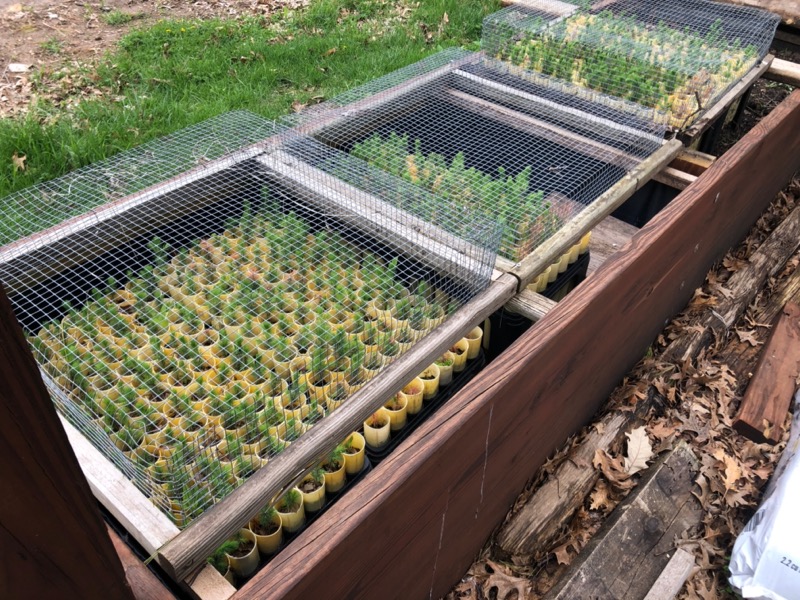
April 2026: All racks back in frame.
These little spruce trees are taking off now that the weather has warmed a bit. I have them back in the frame and I am covering them with these screen boxes -- for no particular reason. Just to be safe, I guess.
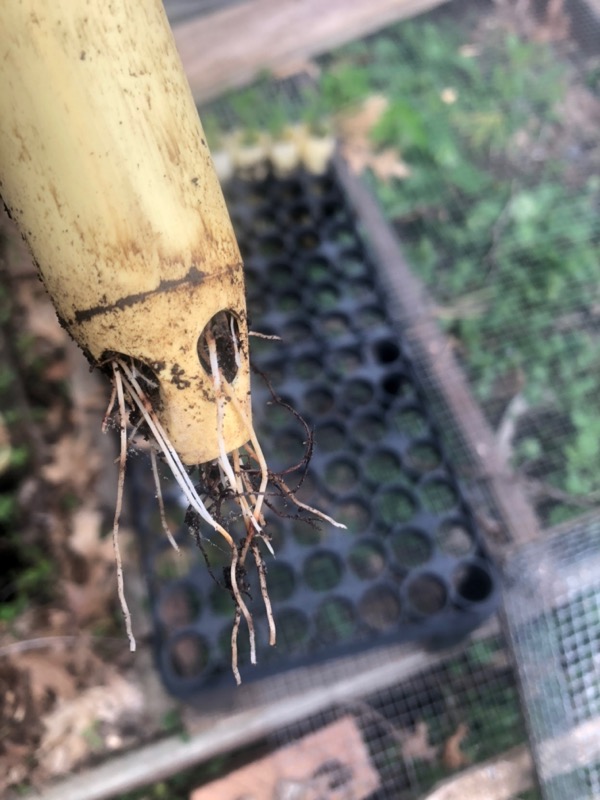
NOTE: I was thinking of leaving the 'outside' tubes in the ground until I pulled one out to check it and found these roots.
If I don't pull these pots now, the roots will grow and keep me from pulling them later.
When the tubes are in the rack these roots will 'air-prune' themselves.
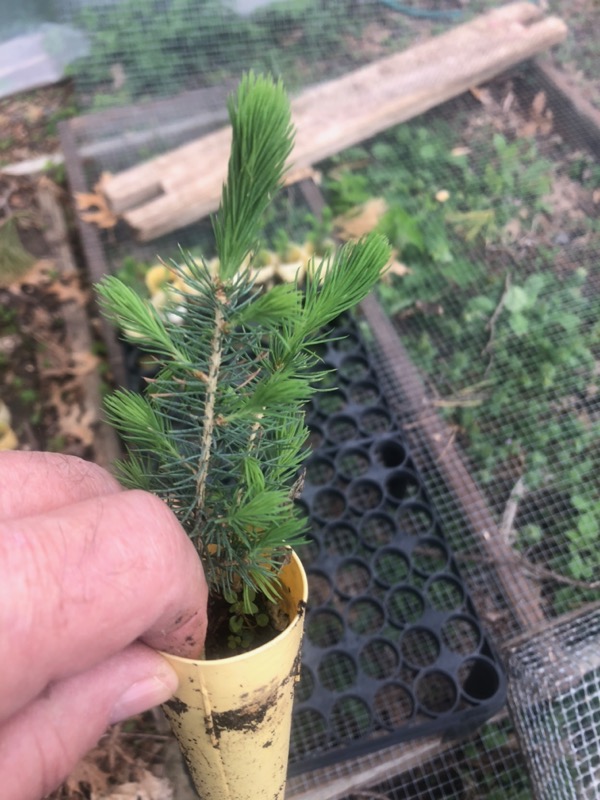
At this rate of growth (already) I suspect these seedlings will outgrow these small tubes in a few months.
What Then will I do?
August 2025: Planting Catulpa seedlings after one summer's growth.
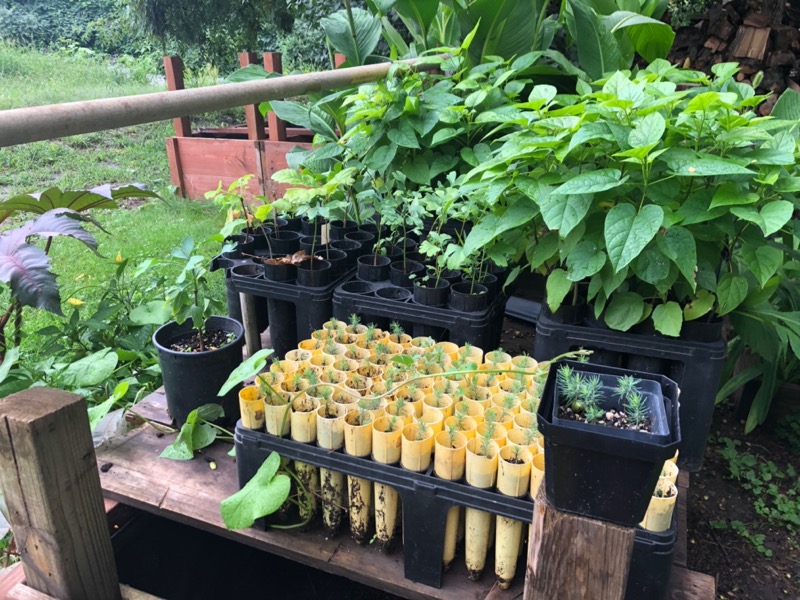
Catulpa in D40 pots (upper right in photo) after 6 Months.
These fast-growing seedlings are already getting a bit rootbound and are ready for transplanting.
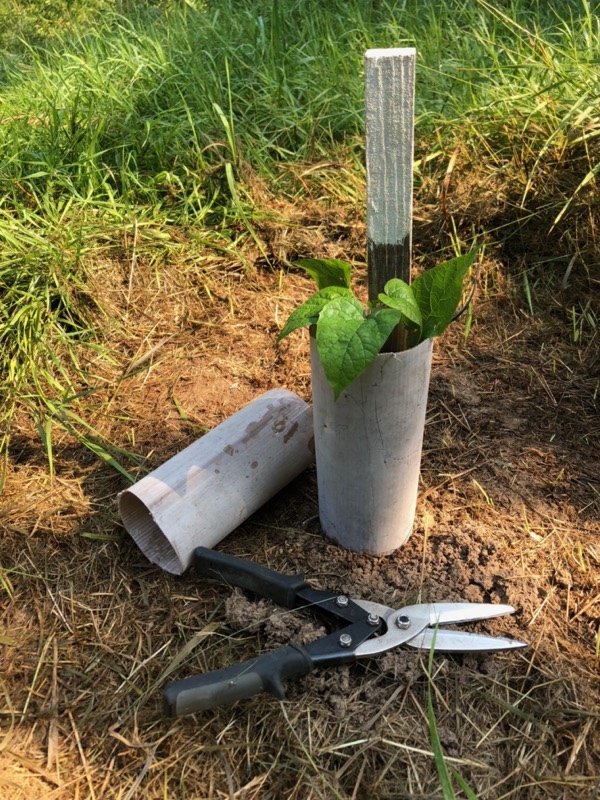
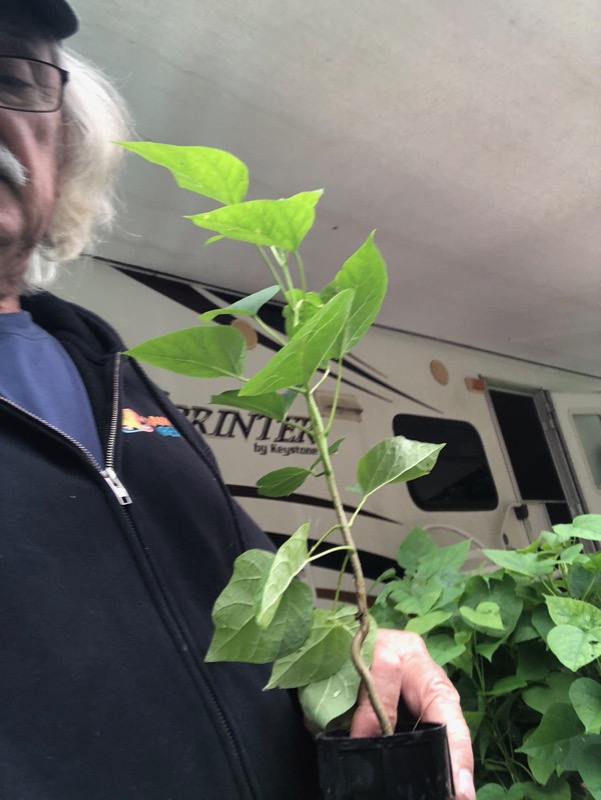
August 2025: Planting 30 Catulpa seedlings in open areas on the farm.
Transplanting from D40 containers is extremely easy this year because the ground is wet after a very wet summer.
Using a bulb planter to dig extract a core of soil leaving a hole that pretty much matches the root ball from the D40. Simply drop the seedling into the hole and lightly stomp to seel the cracks.
I pour on about a cup of water with a starter fertilizer disolved. Then I drive a stake to mark the plant -- in the weeds that will follow.
I cut up old tree tubes to make short collars to go around the base. I'm hoping this will discourage rabbits and other creatures from attacking the stems.
Dear are NOT supposed to take much interrest in Catulpa leaves.
We'll see ...
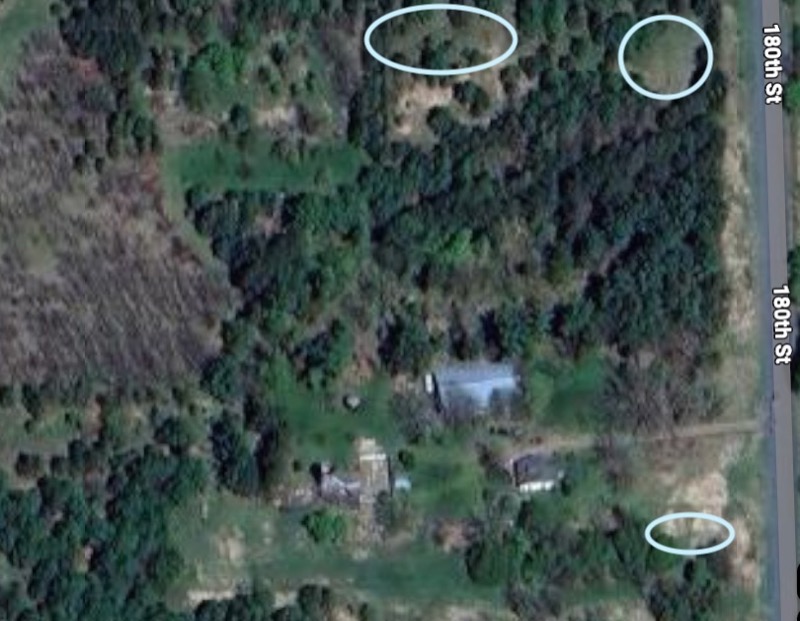
Two of the main locations where we put over 30 Catulpa.
I'm not sure it's a good idea to plant these trees in plots like this but I needed to get them in the ground before winter.
Both these sites have had trouble establishing trees due to either the poor ground or the fierce competition from grass and other weeds.
Summer 2025: Forest Stand Improvement (continues).
The objective is to release high value hardwoods on a tree by tree basis.
A secondary objective is to remove invasive species of trees and shrubs growing in the understory.
Clearing pine and spruce trees that are crowding Walnut trees that pave potential to be crop trees
Competition can be either crowding at the base which takes water and nutrients or crowding in the canopy which takes sunlight away from Walnuts.
These trees were planted close together in order to close the canopy quickly to inhibit weed competition. Walnut and evergreens were planted next to each other so that the evergreens would train the Walnuts to grow straight with minimum branching.
Now that the evergreen have done their job (some cases too well) I am tasked with removing some that are too close and out-competing the Walnuts next to them.
Since these trees are groing so tight together, after cutting a tree it has no place to fall and is held up by it's neighbors. This requires bringing the tree STRAIGHT down by blocking it down. This is somewhat dangerous and requires careful planning and execution.
After the tree is on the ground, all the branches must be removed in order to fascilitate decompsition. My forester recommended getting the brush cut to within 3 feet of the ground. I do better than that.
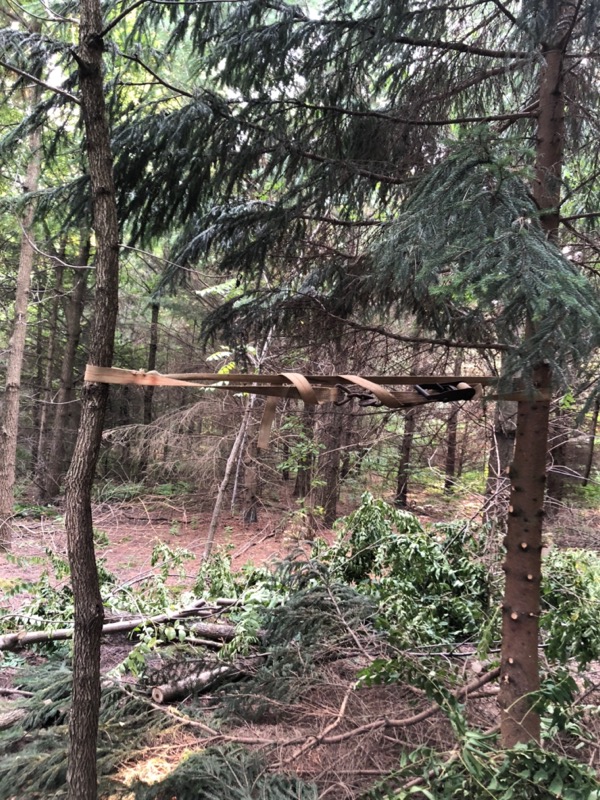
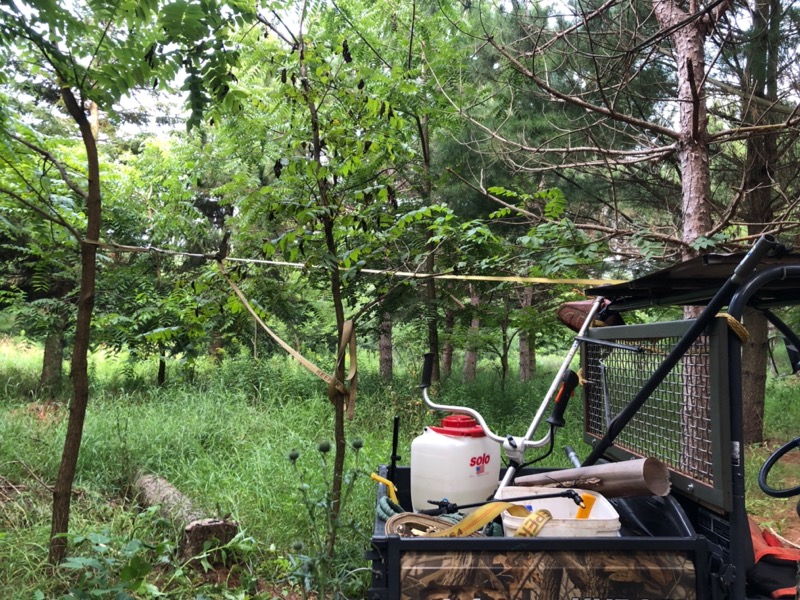
Useing rachet straps to pull a leaning Walnut upright.
In some cases the competing pine caused an otherwise straight young walnut to lean away. I am attempting bring these upright so they can take godd advantage of their new space on the ground and access to the sky in the cleared canopy.
This is very labor intensive and doesn't scale well to a woodlot sized project but I've heard of people doing this and I thought I'd try it.
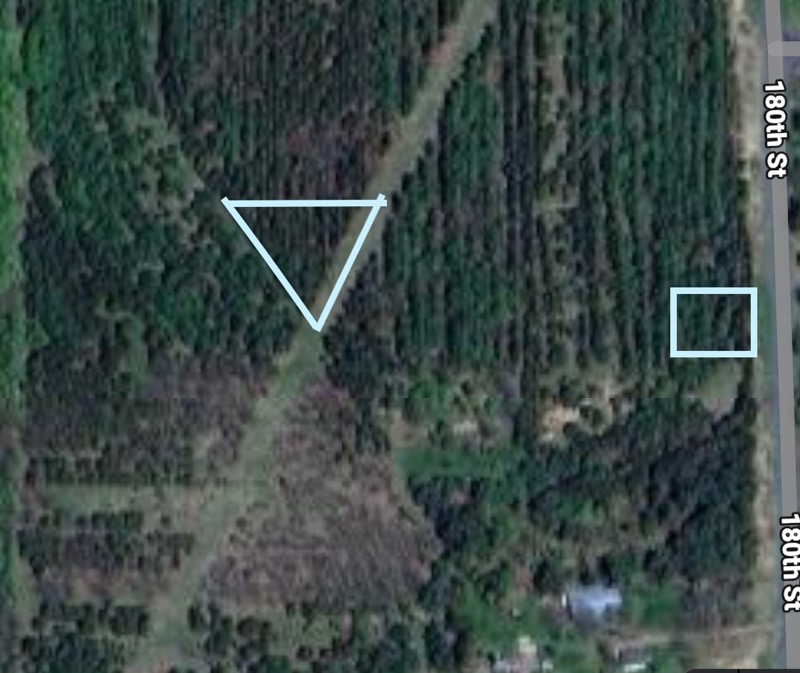
Two of the main locations where I was releasing Walnut trees
The triangle marks a 1 acre area that has been identified as a starting point in a USDA project to improve this entire stand. Since I am doing all the work we have limited it to one acre parcels each year.
This is the first year.